


Start with the type and severity of acne
Acne may involve comedones, inflamed papules, pustules or deeper nodules. Where it appears, how long it has lasted, whether it scars and how it affects wellbeing also matter. In a video consultation, a doctor can review clear photographs, previous treatments, other medicines, pregnancy possibility and related symptoms. An image is not always enough to confirm the diagnosis: some acne-like rashes need an in-person or dermatology examination.
Common topical treatments
Clinical guidelines include benzoyl peroxide, topical retinoids and azelaic acid, alone or in combinations selected for the person. They often need several weeks of consistent use; starting too many products at once may irritate skin and obscure what helps. A clinician considers strength, tolerance, routine and contraindications. Topical antibiotics should not be used indefinitely as the only treatment because antimicrobial resistance matters. Gentle cleansing, a non-comedogenic moisturiser and sun protection can support a simpler routine.
When tablets or a referral are considered
For moderate or severe acne, a doctor may consider a time-limited oral antibiotic with topical treatment; guidelines recommend reassessment after 12 weeks. Some people need hormonal assessment. Oral isotretinoin is reserved for severe, resistant or high scarring-risk acne and requires specialist oversight and strict pregnancy-prevention measures. It cannot be promised from a brief video appointment. Painful nodules, scarring, marked distress or failure of appropriate treatment are reasons to discuss dermatology referral.
Preparing for a video appointment
Take photographs in natural light from the front and both sides, without filters. Note when breakouts began, products used for at least six to eight weeks, reactions, other medicines and your goals. Tell the doctor if you are pregnant, planning pregnancy or breastfeeding before using retinoids or other acne treatments. Costa Medical Services can assess the concern in an online consultation; the doctor will explain a plan, prescribe only when appropriate and recommend review or referral if needed. Medicine is paid for separately at the pharmacy.
What causes acne, and when does it go away?
Acne begins when hair follicles become blocked by oil and dead skin cells. Inflammation and bacteria in the follicle can contribute to red or pus-filled lesions. Hormonal changes, family history and some skin or hair products can also play a part. Acne is not caused by being dirty, and vigorous scrubbing can irritate it. Many people improve after adolescence, but acne can start or persist in adult life. There is no birthday when it must disappear.
After a treatment starts, visible improvement often takes 6 to 8 weeks; a first plan is commonly reviewed after about 12 weeks. Those are review points, not a guarantee that the skin will be clear by then. If acne is leaving scars or affecting confidence, seek help sooner rather than waiting for it to disappear on its own.
Acne in women and men

In women, breakouts may fluctuate around menstrual periods and can continue through adulthood. A clinician may ask about pregnancy, contraception, medicines and symptoms such as irregular periods or excess facial hair when deciding whether further assessment is useful. Those symptoms do not automatically mean a hormonal disorder. In men, facial acne can overlap with shaving irritation or folliculitis; back and chest lesions may also need attention. In either case, the treatment choice depends on lesion type, severity, scarring risk and what has already been tried, rather than sex alone.
How different acne lesions look
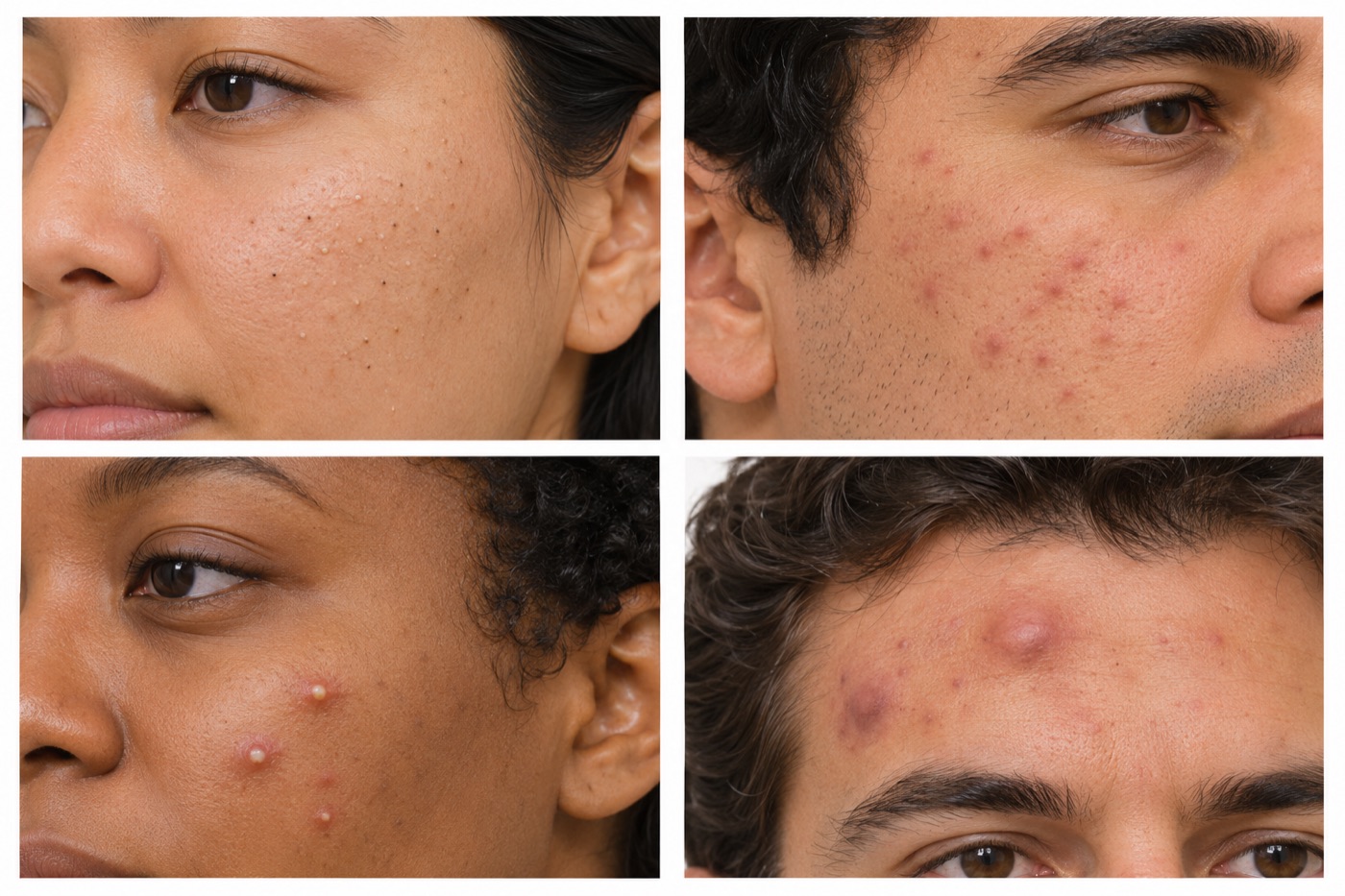
Comedones
Blackheads and whiteheads are blocked follicles, often without much redness.
Papules
Small inflamed red bumps without a visible pus-filled centre.
Pustules
Inflamed bumps with a visible white or yellow centre.
Nodules
Deeper, often painful lumps that need assessment because scarring is more likely.
Daily habits that can help
Wash gently up to twice daily and after sweating, using a mild cleanser and fingertips. Avoid scrubbing, picking and squeezing lesions. Choose moisturiser and sunscreen labelled non-comedogenic, and remove make-up before bed. These habits support treatment and reduce irritation; they do not replace it when acne is persistent or severe. Give a prescribed routine enough time before adding several new products. Diet is sometimes discussed, but a single food restriction is not a proven cure for everyone.
Could it be another skin condition?
Rosacea can cause persistent facial redness and spots without typical blackheads. Eczema and contact dermatitis often itch or sting and may be linked to irritants or products. Folliculitis can resemble acne around hair follicles, including after shaving. Perioral dermatitis can appear around the mouth. A new, rapidly spreading or painful eruption should not be assumed to be acne. The existing dermatology guide groups these skin concerns and explains when online assessment is suitable.
When to seek more help
Ask for medical assessment if you have painful deep lesions, early scarring, persistent acne despite a reasonable treatment course, or substantial distress. Moderate or severe acne may need a combined topical and oral plan; oral antibiotics should be used for a limited period and not alone. Severe acne or failure of initial treatment may require a dermatologist and consideration of isotretinoin with its required safeguards. Seek urgent in-person help for fever, rapidly spreading redness, marked swelling near an eye, or a suspected severe drug reaction. A video consultation can start the assessment, but some situations need an examination.
Frequently asked questions
How long does acne treatment take to work?
Many regimens need several weeks; guidelines suggest reviewing initial treatment at around 12 weeks.
Can acne be assessed by video?
Often an assessment can begin with clear photos and a history. Some rashes or severe cases need an in-person examination.
Will I receive isotretinoin at my first appointment?
That cannot be promised. It requires clinical criteria and specific supervision, usually involving a dermatologist.
What if I am pregnant?
Tell the doctor before using any treatment: several common medicines, particularly retinoids, are unsuitable in pregnancy.