

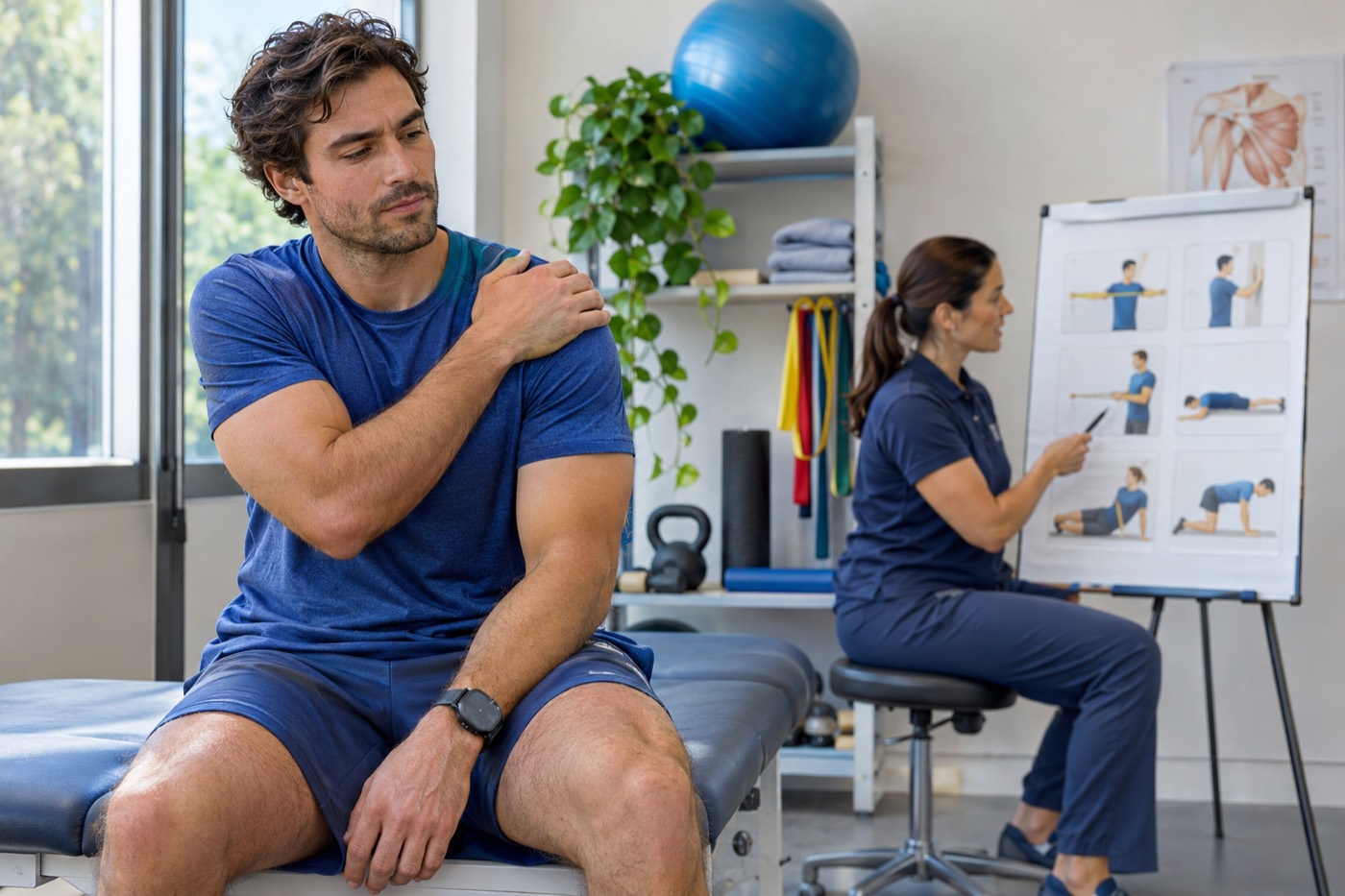
Why “repairing” an injury sounds attractive
A sore knee or a muscle strain that stops training makes shortcuts appealing. BPC-157 and products sold as TB-500 are promoted as ways to speed repair. An interesting biological idea or animal study can justify research, but it does not prove that a person will return to sport sooner or that a product is safe. Recovery depends on diagnosis, severity, training load and complications.
What human BPC-157 data actually show
One retrospective knee-pain study contacted 16 people after injections of BPC-157, alone or with another peptide. Some reported relief, but there was no comparison group or validated functional outcome. The design cannot show how much improvement came from the product, natural recovery or other care. A muscle-injury trial is listed on ClinicalTrials.gov; registration means a question is being studied, not that benefit has been demonstrated. Adequate controlled trials of outcomes, dosing and long-term safety are still needed.
What to do when an injury does not improve
A clinical assessment can distinguish overload from an injury that needs imaging, physiotherapy or orthopaedic review. Care often involves load management, progressive rehabilitation and criteria for returning to activity, adapted to the structure injured. If you cannot bear weight, have a deformity, fever, severe pain or neurological symptoms, seek urgent in-person care. A video consultation can start the assessment and decide whether an examination is needed, but cannot replace one when the diagnosis depends on it.
Online products and anti-doping
The FDA has identified potential risks with preparations of BPC-157, including impurities and immune reactions, and limited human safety information. An overseas offer or “research only” label is not Spanish authorisation. Competitive athletes should also check the current World Anti-Doping Agency list. Consult that list and the AEMPS CIMA register before considering a named product. Costa can assess injury concerns and guide referral; it does not present BPC-157 or TB-500 as approved sports-injury cures.
How to read a “healing” headline
Ask which tissue was injured, whether the diagnosis was confirmed, how many people took part, whether there was a control group and what “improvement” meant. Less pain for a few days is not the same as a repaired tendon or a safe return to sport. Trials should measure function, time back to training and recurrence as well as safety. A result in mice alone cannot predict a useful human dose or benefit. A registered trial must not be mistaken for a completed, published one.
The consultation that can change the plan now
The first useful decision is usually to confirm the diagnosis and whether an in-person examination is needed. Note how the injury happened, its date, which activity hurts and treatments already tried; take photographs if there is swelling or bruising. A doctor can advise next steps and when physiotherapy, imaging or orthopaedic review is appropriate. We do not promise faster recovery without an individual assessment or prescribe experimental peptides for injury repair.
“Repairing a tendon” means more than reducing pain
Shoulder pain may come from a tendon, muscle, bursa, nerve or joint. Pain may lessen while strength or movement remains limited. So a report of feeling better after BPC-157 does not prove that tissue has repaired. A convincing trial would confirm the original diagnosis, compare the product with appropriate rehabilitation and control care, measure function and safe return to activity, and track recurrent injury and adverse events.
Animal studies generate hypotheses; they do not establish a useful or safe human dose. The limited published human information on BPC-157 cannot reliably separate a peptide effect from natural recovery, physiotherapy or care given at the same time. One person’s positive account is not a general treatment recommendation.
What responsible sports-injury recovery usually involves
A doctor or physiotherapist can assess how the injury happened, examine the area and decide whether imaging or specialist referral is needed. The plan commonly adjusts loading and movement, introduces progressive exercises and defines functional criteria for return to sport. The response depends on the tissue and severity; a shoulder, knee and muscle injury do not share one recovery timetable.
Deformity, inability to move a shoulder after trauma, numbness or severe pain calls for urgent in-person assessment. If recovery is slow, a record of pain, movement, strength and provoking activities helps a clinician review the plan. A video consultation can guide the first step, but cannot replace an examination when one is needed.
How to tell research from a commercial offer
Look for an identifiable trial registration, its participants, comparator and published results. Registration on ClinicalTrials.gov does not mean that a treatment worked or is authorised. Check the exact medicine in Spain’s CIMA register; an import advert or a “research” label is not a routine Spanish prescription route.
Athletes subject to testing also need to check current anti-doping rules. If you have already used a product and develop fever, increasing redness, swelling or breathing difficulty, seek medical care and bring the product details.
Frequently asked questions
Does BPC-157 regenerate a human tendon?
There are no robust clinical trials establishing that claim.
What does the knee study prove?
It is a small uncontrolled retrospective series; it reports experiences, not efficacy.
Can a video consultation be enough for an injury?
It can guide the first step, but many injuries require a physical examination or imaging.